


 Cart
Cart
 sales@molnova.com


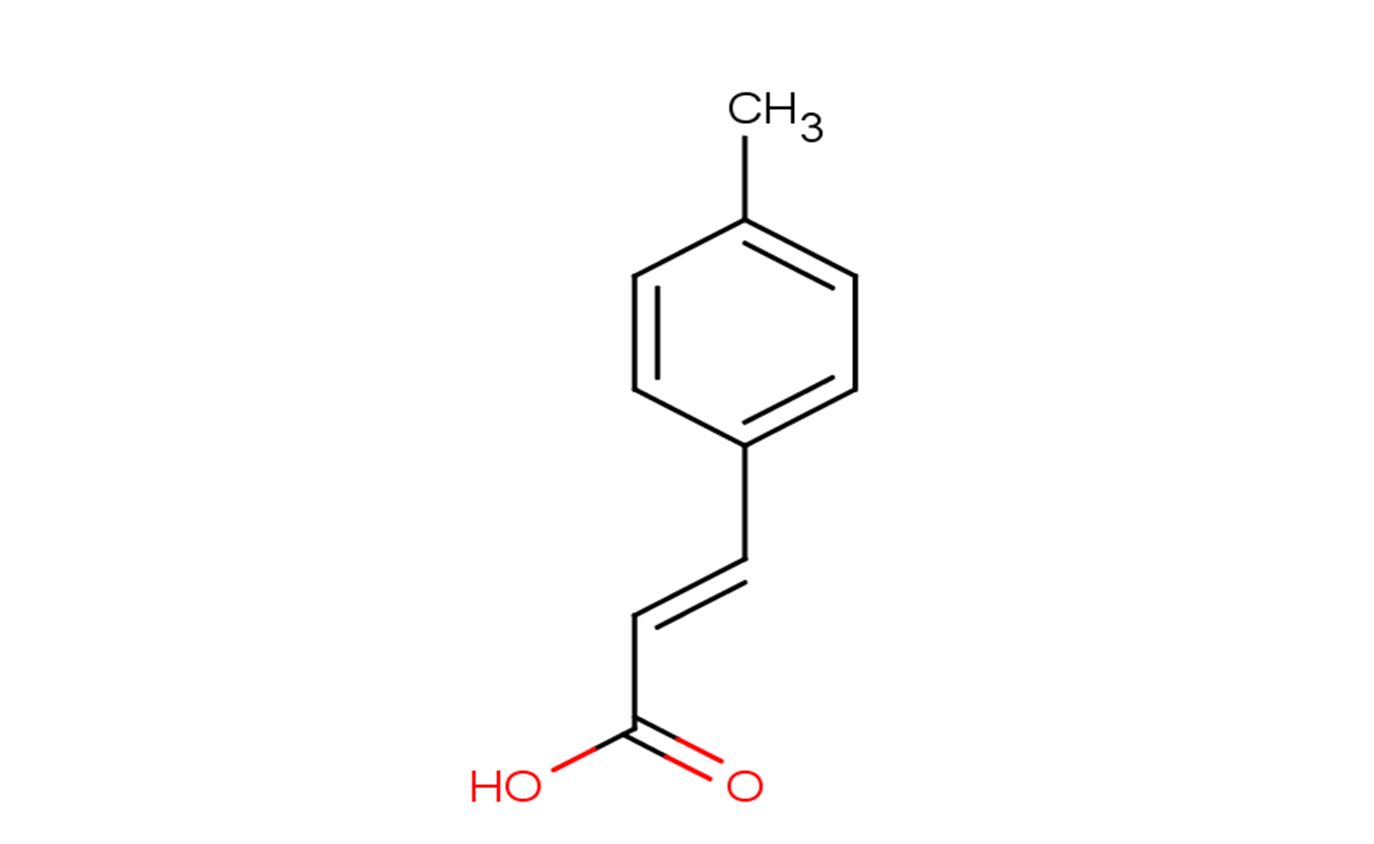
4-Methylcinnamic acid
CAS No. 1866-39-3
4-Methylcinnamic acid( —— )
Catalog No. M23850 CAS No. 1866-39-3
4-Methylcinnamic acid, a Cinnamic acid analog, can be used as a intervention catalyst for overcoming antifungal tolerance. 4-Methylcinnamic acid can improve the potency of cell wall-disrupting agents.
Purity : >98% (HPLC)
 COA
Datasheet
HNMR
HPLC
MSDS
Handing Instructions
COA
Datasheet
HNMR
HPLC
MSDS
Handing Instructions
| Size | Price / USD | Stock | Quantity |
| 1G | 27 | In Stock |


|
Biological Information
-
Product Name4-Methylcinnamic acid
-
NoteResearch use only, not for human use.
-
Brief Description4-Methylcinnamic acid, a Cinnamic acid analog, can be used as a intervention catalyst for overcoming antifungal tolerance. 4-Methylcinnamic acid can improve the potency of cell wall-disrupting agents.
-
Description4-Methylcinnamic acid, a Cinnamic acid analog, can be used as a intervention catalyst for overcoming antifungal tolerance. 4-Methylcinnamic acid can improve the potency of cell wall-disrupting agents.
-
In Vitro——
-
In Vivo——
-
Synonyms——
-
PathwayMicrobiology/Virology
-
TargetAntifungal
-
RecptorANTIFungal
-
Research Area——
-
Indication——
Chemical Information
-
CAS Number1866-39-3
-
Formula Weight162.19
-
Molecular FormulaC10H10O2
-
Purity>98% (HPLC)
-
SolubilityDMSO:10 mM
-
SMILESCC1=CC=C(C=C1)/C=C/C(=O)O
-
Chemical Name——
Shipping & Storage Information
-
Storage(-20℃)
-
ShippingWith Ice Pack
-
Stability≥ 2 years
Reference
molnova catalog



related products
-
Butoconazole
Butoconazole is an imidazole antifungal agentButoconazole is particularly effective against in vivo Candida albicans infections (mice), maintaining good activity down to 0.25% formulation strength and showing unusually low reinfection rates after treatment is ended.
-
Hexaconazole
Hexaconazole is a broad-spectrum triazole fungicide that inhibits ergosterol biosynthesis via inhibition of the cytochrome P450-dependent 14α-demethylation of lanosterol which results in disruption of the fungal cell membrane and cell death.
-
Ametoctradin
Ametoctradin is an inhibitor of the Qo site of mitochondrial respiratory complex III.
